Chinese Language Basics: The 20 Words That Do the Work
You do not need Mandarin to travel China. You need about twenty words, the four tones explained without the linguistics, and a translation app that works offline.
You do not need Mandarin. You need a number system, three food words, and a translation app with the offline pack already downloaded. That is the whole requirement.
The reason is structural. China has more English signage than its reputation suggests — metros, trains, airports and major museums are bilingual. But the person at the noodle counter, the taxi driver, and the auntie at the guesthouse desk often have none. Those are the moments that matter, and they are almost always about numbers or food.
The four tones, without the linguistics
Mandarin is tonal. The same syllable at a different pitch is a different word.
- First tone — flat and high. mā.
- Second — rising, like a question. má.
- Third — dips down then up. mǎ.
- Fourth — sharp, falling, like a command. mà.
Two pairs are worth actually drilling, because getting them wrong changes something real:
| Pair | Meaning | Why it matters |
|---|---|---|
| mā / mǎ | mother / horse | The classic example — harmless in practice |
| sì / shí | four / ten | This one changes prices. ¥4 or ¥10 |
Everything else: context rescues you. Locals are forgiving with foreigners, and they will almost always work out what you meant. Do not let the tones stop you speaking.
The twenty words
Learn these and you can handle a food stall, a taxi and a shop.
| English | Pinyin | Say it like |
|---|---|---|
| Hello | nǐ hǎo | nee how |
| Thank you | xiè xie | shyeh shyeh |
| You’re welcome | bú kè qi | boo kuh chee |
| Sorry | duì bu qǐ | dway boo chee |
| Yes / correct | duì | dway |
| No / not | bú shì | boo shir |
| How much? | duō shao qián? | dwor shao chyen |
| Too expensive | tài guì le | tie gway luh |
| Cheaper? | pián yi diǎn? | pyen ee dyen |
| I don’t understand | tīng bù dǒng | ting boo dong |
| Numbers 1–10 | yī èr sān sì wǔ liù qī bā jiǔ shí | ee ar san suh woo lyo chee ba jyo shir |
| Water | shuǐ | shway |
| Hot water | rè shuǐ | ruh shway |
| Not spicy | bú là | boo lah |
| Delicious | hǎo chī | how chir |
| This one | zhè ge | juh guh |
| Where is…? | … zài nǎ lǐ? | dzai nah lee |
| Toilet | cè suǒ | tsuh swor |
| Bill, please | mǎi dān | my dan |
| No MSG | bú yào wèi jīng | boo yow way jing |
Not spicy is the one to learn first if you are heading to Sichuan or Hunan. Bú là — and then watch them add chilli anyway.
The app that actually works
This is the part people get wrong. Google Translate is blocked in mainland China. It does not work without a VPN, and the offline pack does not help if the app cannot reach its services to download in the first place.
What to do instead, before you fly:
- Download an offline Chinese pack. Apple Translate includes offline Chinese. Baidu Translate is built in China and works natively there.
- Test it in airplane mode at home. If it fails, you have your answer early.
- Learn the camera function. Pointing at a menu and reading the overlay is the single highest-value use of your phone in China.
For the wider connectivity picture — eSIMs, what else is blocked, which apps to install — see Staying connected. The same characters do double duty on menus and market stalls: order confidently with the dining customs guide.
When words fail, show the screen
If you say a word and it does not land, do not repeat it louder. Type it, or show the characters, or point at the picture. Reading beats listening for most people in a noisy environment.
Two habits that save time:
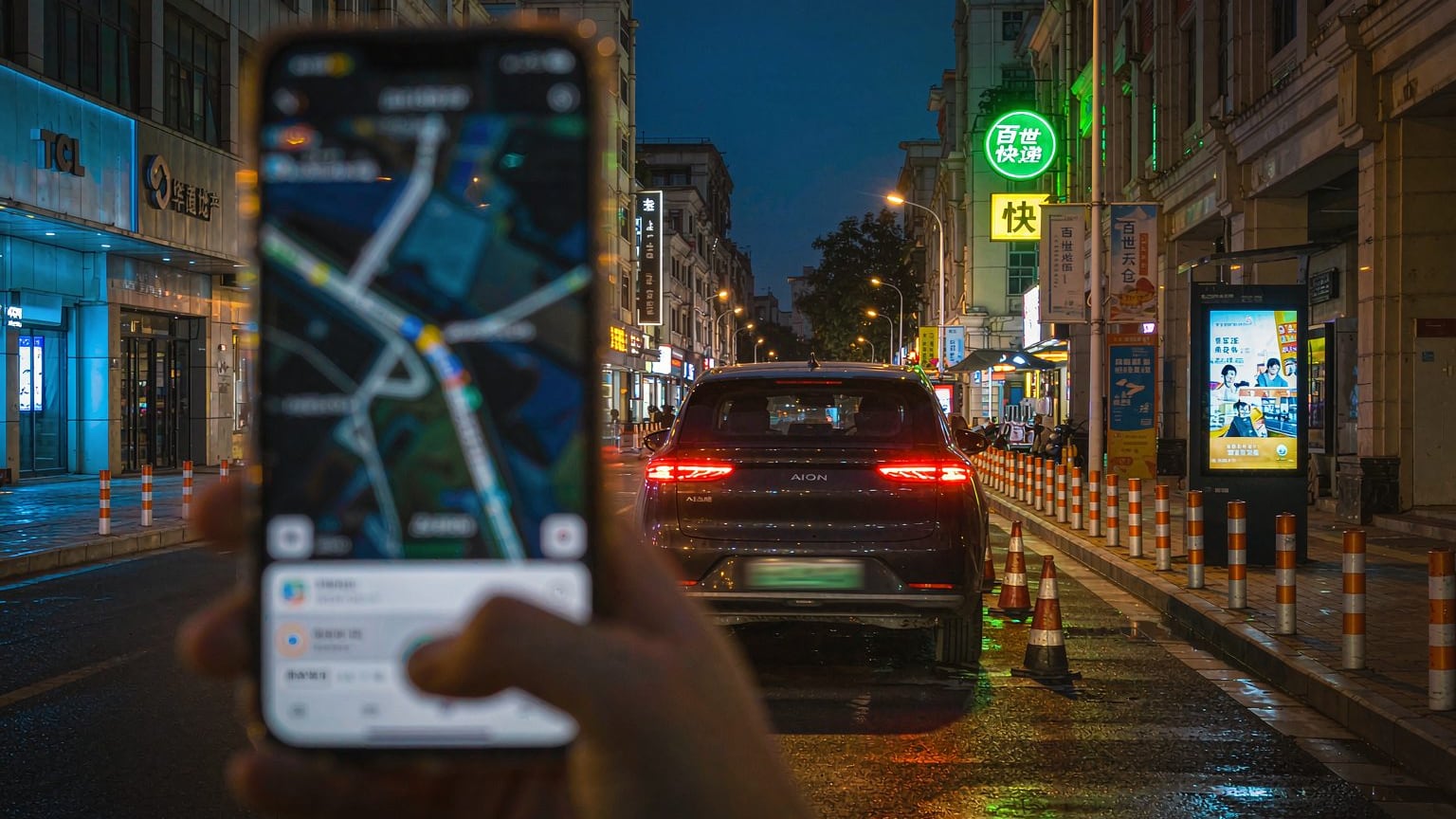
- Screenshot your hotel’s name and address in characters. Paste it into the app rather than saying it out loud — how that works is spelled out in the DiDi and taxis guide.
- Save the words you use most as a note so you can show them without unlocking your translation app each time.
Signs worth recognising
A handful of characters appear constantly and take ten minutes to memorise:
| Character | Meaning | Where you see it |
|---|---|---|
| 出口 | Exit | Metro, stations, car parks |
| 入口 | Entrance | Everywhere |
| 推 / 拉 | Push / Pull | Doors |
| 男 / 女 | Men / Women | Toilets |
| 禁止 | Prohibited | Next to a picture of the thing |
| 免费 | Free of charge | Sometimes genuinely free |
| 开水 | Boiled water | Station hot-water taps |
Where this fits
Language is a support skill, not a goal. Get the twenty words and a working offline translator, then spend your attention on the food — the dining customs are where most of the awkward moments actually happen.
Frequently asked questions
Do I need to speak Mandarin to travel in China?
No. Major cities have enough English on signage and menus, and translation apps handle the rest. But hotel staff, taxi drivers and small restaurant owners often have none, so twenty words plus a working translation app covers the gap.
Are the tones really necessary?
For the twenty words below, roughly. Getting a tone wrong usually still works because context rescues it. Two tone pairs are worth drilling: mā (mother) versus mǎ (horse), and sì (four) versus shí (ten) — because mixing those up changes a price.
Which translation app actually works in China?
Google Translate does not work without a VPN. Use the offline Chinese pack in a translator that does — Apple Translate has offline Chinese, and Baidu Translate works natively in China. Download the pack before you fly, not at the airport.
Will people understand pinyin?
Usually, in cities. Younger staff read it. Older shopkeepers may not. Showing the characters on your phone screen is more reliable than saying the word.