Alipay & WeChat Pay for Foreigners: The Complete Setup Guide
How to link your Visa/Mastercard to Alipay and WeChat Pay before you land in China, what the fees really are, and where you still need cash.
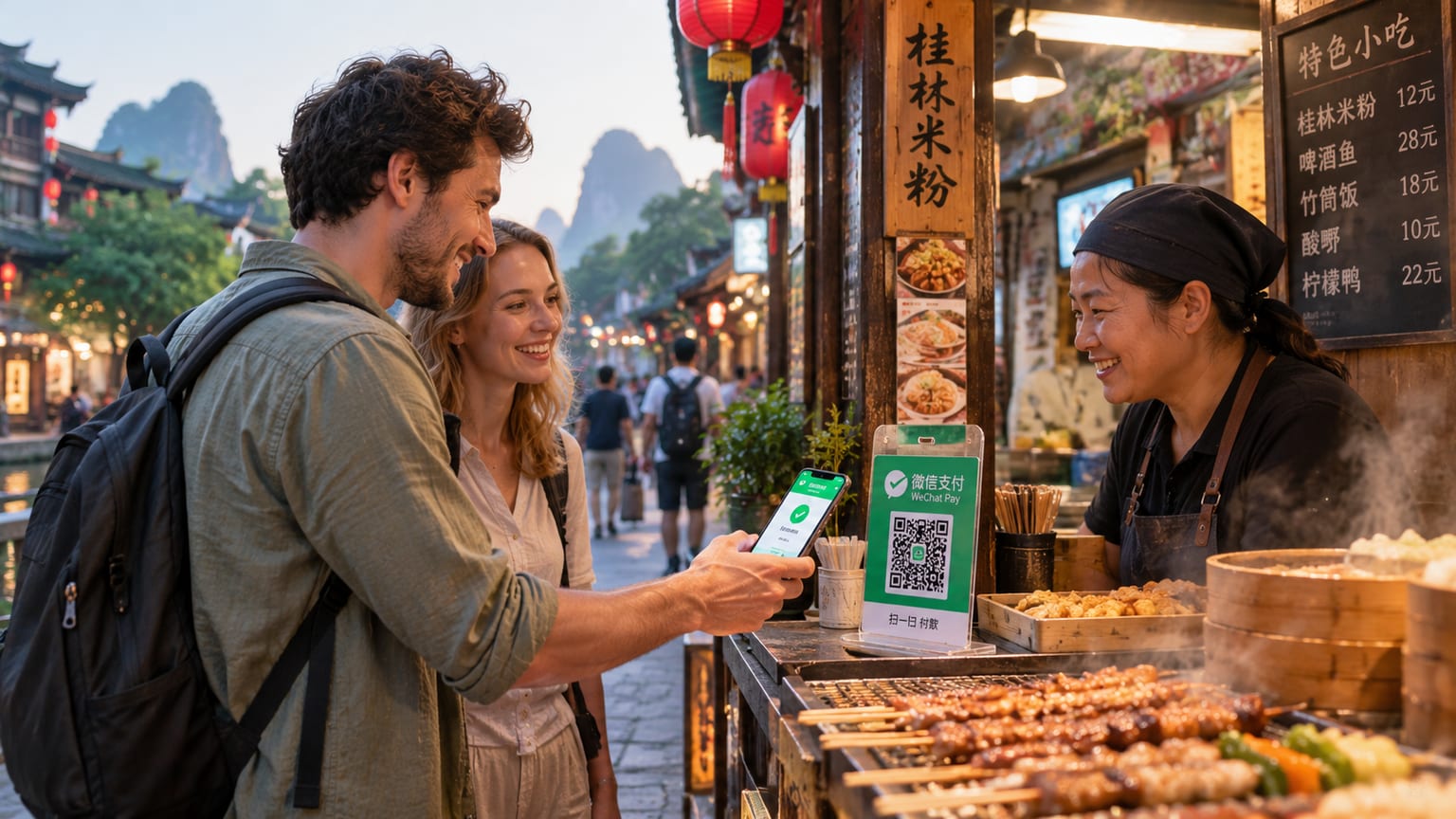
China runs on QR codes. Street dumpling stalls, temple donation boxes, subway gates, taxis — everything takes Alipay (支付宝) or WeChat Pay (微信支付), and both apps have been foreigner-friendly since 2023: link your home Visa/Mastercard/Amex and pay like a local. Set this up before you fly; it takes 15 minutes and saves you a world of friction.
Step 1 — Set up Alipay
- Download Alipay (App Store / Google Play) and register with your home phone number and passport. Switch the interface to English in Settings → Language.
- Go to Me → Bank Cards / Cards → Add a card, enter your Visa/Mastercard/Amex details.
- Verify with SMS and you are done — your card shows as an international card.
Payment flow: you scan the merchant’s QR code (Scan), or the merchant scans your code (Pay/Receive). Both work everywhere, from airport shops to noodle stands.
Step 2 — Set up WeChat Pay
WeChat is China’s everything-app — messaging plus payment plus the mini programs used to book attractions and order food:
- Download WeChat, register with your phone number, then open Me → Services → Wallet.
- Add your international card under Wallet → Cards.
- Enable the payment features you need (Money → QR payments just work after card linking).
You need WeChat anyway for mini programs — many museums, the Forbidden City booking flow, and food-delivery apps live inside it.
Fees, limits and the smart ways around them
| Item | Detail |
|---|---|
| Small QR payments (≤ ¥200) | No fee on linked international cards |
| Larger payments | ~3% fee on the transaction |
| Monthly cap (new users) | Around ¥50,000 cumulative; raise by in-app verification |
| Refunds/deposits | Refunds return to the original card; hotel deposits often pre-authorize in-app |
Budget travelers mostly stay under ¥200 per transaction anyway. If you expect heavy spending, Alipay’s balance top-up (via partner options) or linking a fee-free travel card dodges the 3%.
Where cards and cash still matter
- Hotels and malls increasingly accept Visa/Mastercard directly; airport counters usually do.
- ATMs: Bank of China and ICBC machines accept foreign cards (pick “English” on screen). Withdrawal fees depend on your home bank.
- Cash: legal everywhere, occasionally essential (the odd market stall, older taxi). Carry ¥300–500 in small notes as backup.
Everyday scenarios
- Metro/bus: open the Transit code inside Alipay or WeChat, or just tap the QR at the gate. No transport card needed.
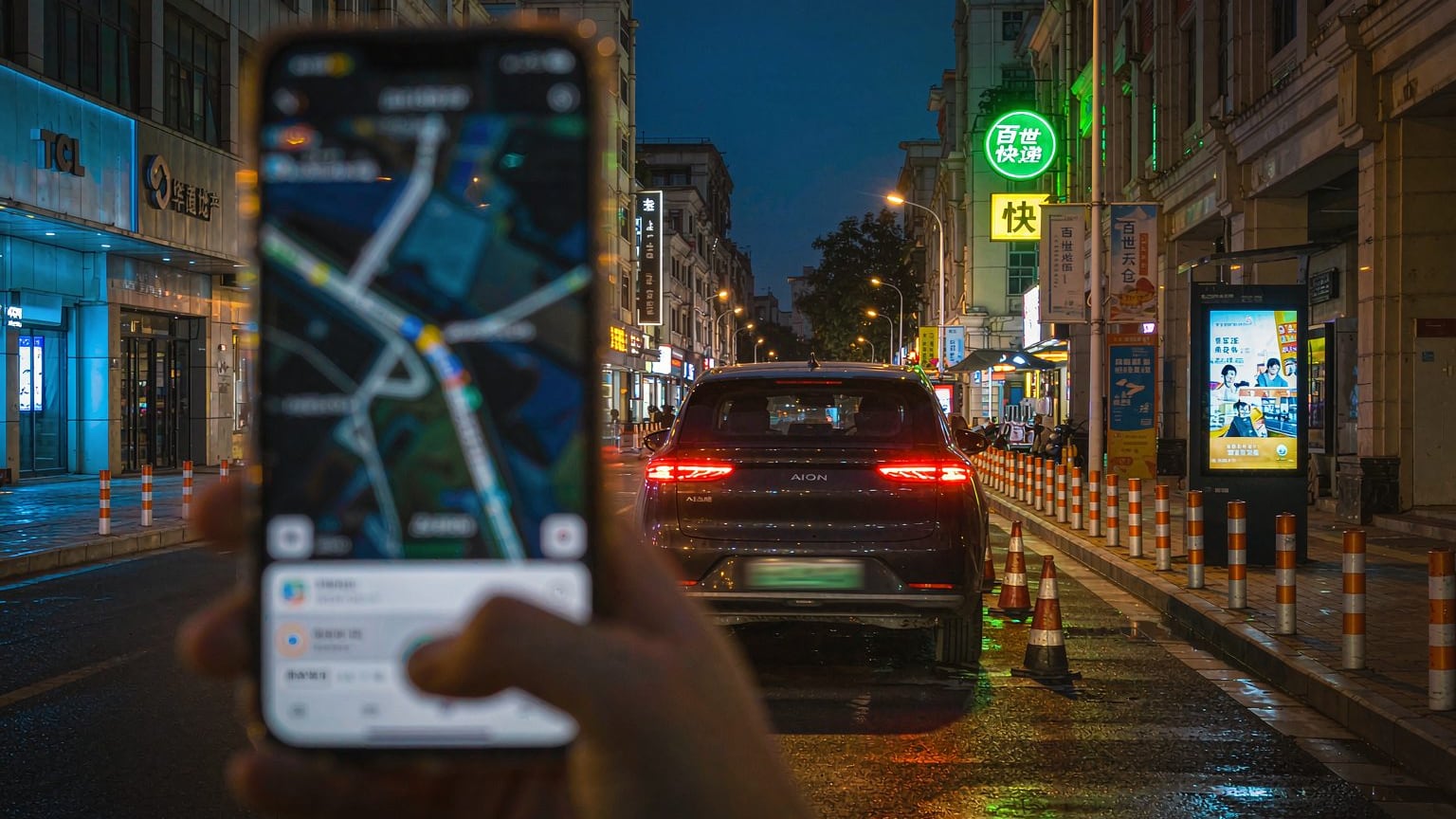
- Taxis: cash is accepted (drivers must), but Didi inside Alipay/WeChat mini programs is smoother and gives you route receipts.
- Street food: scan the printed QR on the stall, type the amount, show the success animation. Offline? QR payments still work without active internet for the payer.
- Splitting bills: locals send each other red packets — you can just transfer your share.
Troubleshooting
- Card won’t link: try a different network, or link via the website version; Amex sometimes needs a retry.
- Payment declined for “limit”: hit your daily cap — wait or top up balance.
- Need a receipt (fapiao): ask staff; tourist-facing merchants handle it fine.
With payments sorted, the other pre-flight must-do is connectivity — see Staying Connected in China — and entry paperwork in the visa-free transit guide.
Frequently asked questions
Which foreign cards work with Alipay and WeChat Pay?
Visa, Mastercard, American Express, JCB, Discover and Diners Club can all be linked to both apps for QR-code payments. Some regional cards (e.g., certain UnionPay partners) also work. Top-ups directly from foreign bank accounts are limited to a few partner banks.
What fees will I pay?
QR-code payments charged to a linked international card are fee-free for transactions up to ¥200; larger transactions carry roughly a 3% fee. Frequent big spenders sometimes top up the Alipay balance instead. Check in-app for the current schedule.
Can I still use cash in China?
Yes — cash is legal tender and businesses must accept it, including taxis. The friction is that staff are often slow with it and small vendors may struggle for change. Carry ¥300–500 as backup, not as your main method.
Do I need a Chinese phone number to set these up?
No. Both apps register with your home number and passport. You will need SMS verification codes, so keep your home SIM reachable (international roaming SMS) or use a travel eSIM that supports receiving SMS.