China's High-Speed Rail: How Foreigners Book, Board & Ride (2026)
Booking 12306 or Trip.com with a passport, which seat class to pick, station security timing, luggage rules and the routes worth riding — the complete first-timer guide.
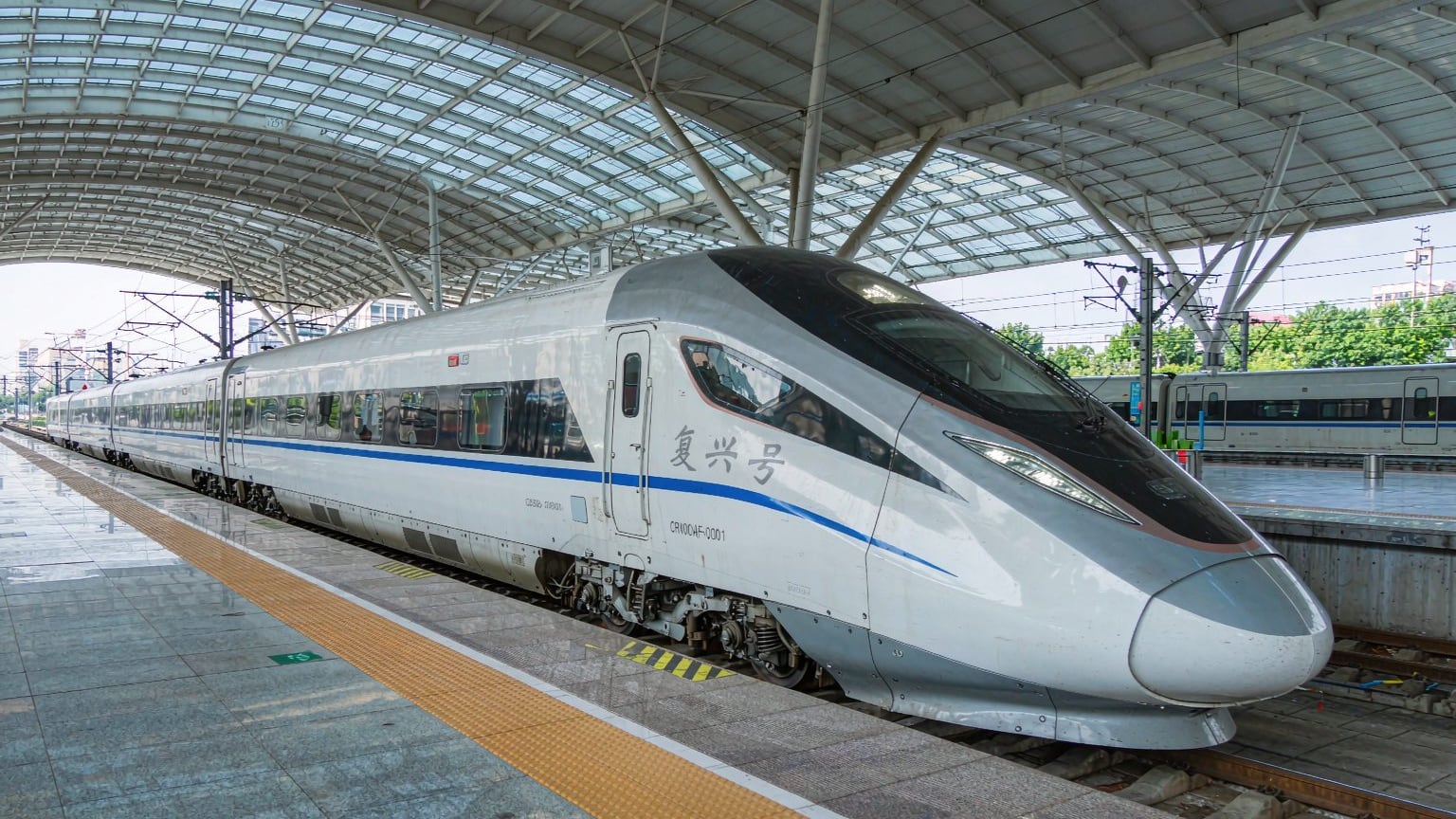
China’s high-speed network is the largest on earth — more than 48,000 km of track, trains at 350 km/h, city-center-to-city-center with none of airport theatre. For visitors, it is also the pleasantest way to see the country. This guide covers everything foreign passports need.
Booking: three ways, one passport
- Trip.com (easiest) — English checkout, accepts any passport, small service fee, e-ticket confirmation in-app. Tickets open ~15 days before departure (occasionally less).
- 12306 official app/website — English interface exists; register with your passport, then add it as a passenger document. Slightly clunkier, zero fees, and access to the waitlist system.
- Station ticket windows — the fallback; bring your passport, expect queues and a Chinese-first counter experience.
Whichever channel you use, the passport is the ticket: at the station you pass gates (or the manual channel, if the gate balks at your passport) by scanning it. No printing, no exchange.
Seat classes on a G train (Beijing → Shanghai example)
Prices shift by train, day and how early you buy — these are late-2026 observations for the full Beijing–Shanghai run, which is priced dynamically rather than fixed:
| Class | Price (approximately) | What you get |
|---|---|---|
| Second class (二等座) | ¥598–661 | 3+2 seats, tray, power outlet below — perfectly comfortable |
| First class (一等座) | ¥1,005–1,095 | 2+2, wider seats, quieter carriage |
| Business class (商务座) | ¥1,995–2,315 | Lie-flat pods, lounge access, meals on some routes |
China abolished fixed fares here: there is a published ceiling (raised 20% in May 2026, to about ¥794 second class on this route) and every train is discounted off it. Two departures forty minutes apart can differ by 15%, so check your actual train rather than budgeting from a single number.
For rides under 4 hours, second class is the rational choice. Overnight D/Z sleeper trains (soft sleeper four-berth cabins) remain a budget alternative on long hauls — and a memory in their own right.
Station survival: the timeline
- T-60 min: arrive; find the correct entrance (major stations have several — check your ticket’s station name carefully: Beijing South ≠ Beijing West ≠ Beijing Fengtai).
- T-50: security screening (bags X-rayed; water is fine).
- T-40: find the waiting hall for your train — departure boards are in English and Chinese; your ticket shows the gate (检票口) letter/number.
- T-15: gate opens — passport lane or manual channel on the left.
- T-5: boarding closes. Doors are punctual to the second.
On board
- Language: station and onboard announcements are bilingual on major routes; the LED boards show the next stop in English.
- Food: box meals (¥25–45, pre-orderable via 12306 for delivery to your seat), a dining car on most G trains, instant noodles sold onboard, and coffee carts on busy lines.
- Power: outlets at every seat on modern stock (European two-pin + USB on newer cars).
- Quiet: carriages are civilized; take a cue and keep calls short.
Routes worth riding
| Route | Time | Why |
|---|---|---|
| Beijing → Xi’an | 4.5–6 h | The imperial-capital hop on our 10-day itinerary |
| Beijing → Shanghai | 4.5 h | The flagship 350 km/h line |
| Shanghai → Hangzhou | 45–60 min | Day-trip territory |
| Xi’an → Chengdu | ~3 h | Mountain viaducts the whole way |
| Guangzhou → Hong Kong West Kowloon | 47 min | Immigration co-located — walk through both borders |
Changes, refunds, missed trains
- Changes (same origin/destination, date/time) are usually free before departure in-app; refund fees scale with notice (5–20%).
- Missed your train? You can rebook the next train at the station counter same-day for a small handling fee — show up fast.
- Attraction tickets (e.g., the Forbidden City, the Terracotta Army) use the same passport-based booking flow as trains on Trip.com — learn it once, use it everywhere.
Money saved, time gained
A second-class ticket usually beats domestic flights on price and door-to-door time under 1,000 km. Pair rail with our payments guide — most station shops take Alipay/WeChat — and the visa-free transit rules that make multi-city rail loops possible without a visa.
Frequently asked questions
Can foreigners book Chinese train tickets online with a passport?
Yes. The official 12306 app and website support English and passport-based registration, and Trip.com sells the same tickets with a smoother English checkout for a small service fee (¥10–30). Your passport is your ticket — no printing needed.
How early should I arrive at the station?
45–60 minutes for major stations at peak times, 30–40 minutes otherwise. Security screening plus passport-gate entry lines can be long, and boarding stops 5 minutes before departure.
Is there a luggage limit on Chinese trains?
Nothing as strict as airlines — bring what you can carry up the station stairs. Adult passengers may bring up to 20 kg plus reasonable hand items; oversize items beyond 130 cm total dimensions are not allowed. Luggage racks are overhead and at car ends.
What if my train ticket is sold out?
Join the 12306 waitlist (候补) — it auto-books when seats free up and succeeds surprisingly often. Alternatively book segment splits (e.g., Beijing–Jinan + Jinan–Xi'an) or check first-class/business, which sell out later.