Didi and Taxis in China: A Foreigner's Setup Guide
How to use Didi with a foreign phone number and card, what a taxi should cost, how to avoid the airport tout, and what to do when the driver cannot find your hotel.
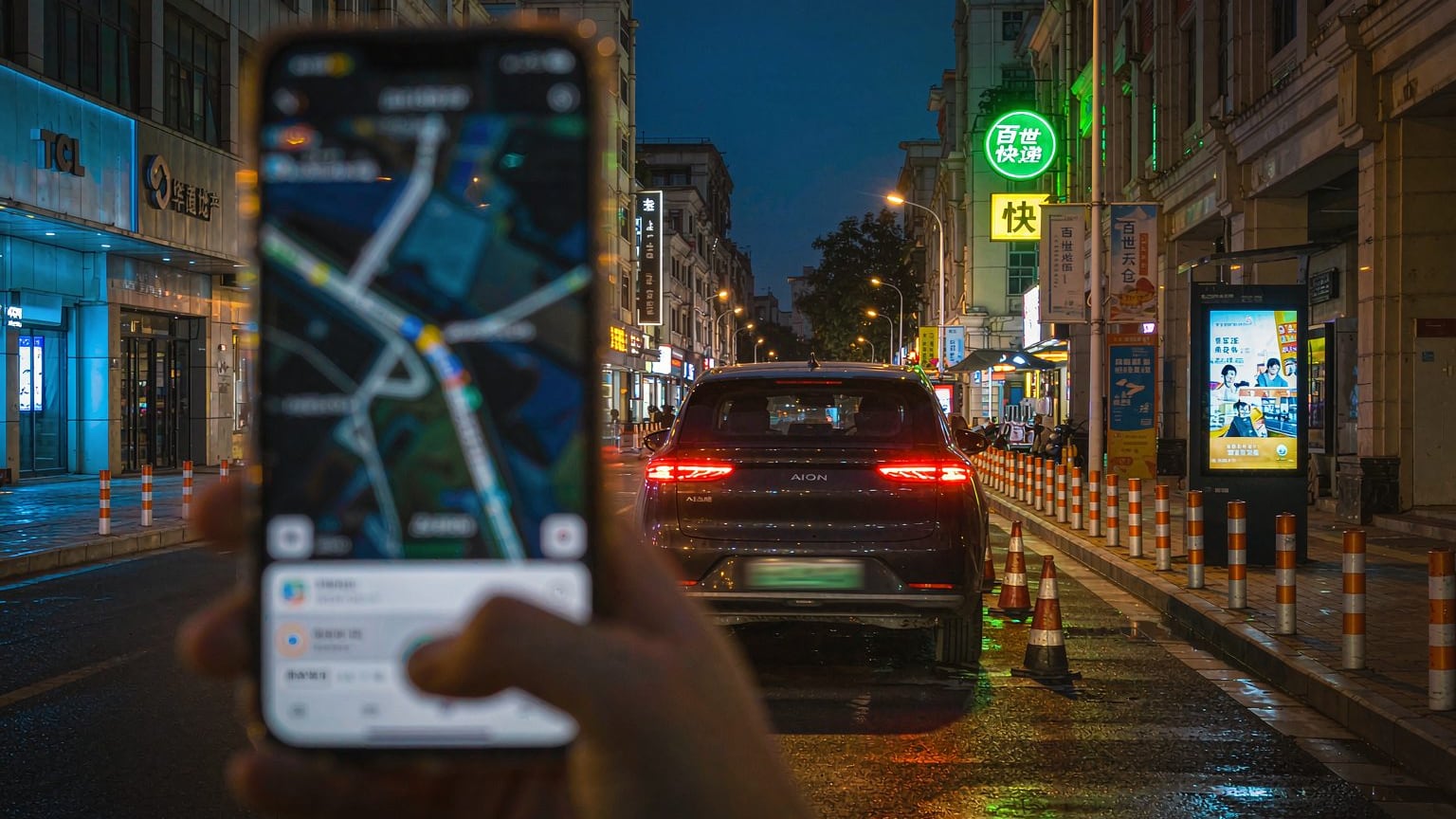
Taxis in China are metered, regulated and honest. Ride-hailing is cheap, ubiquitous, and — for a visitor — dramatically easier to use than a street taxi. The whole difficulty is setting it up before you need it.
Why Didi beats a street taxi for visitors
The Chinese name is 滴滴出行, but the app you want is Didi, and it has an English interface.
The reason it matters is not price. It is this: you set the destination on a map inside the app. The driver sees it. You never have to pronounce a Chinese address, and the driver never has to guess which of the three “Beijing Road” hotels you mean.
That one feature removes almost every failure mode of taking a taxi in a language you do not speak. Everything else is secondary.
Setting it up
Do this before you fly, on home wifi.
- Install Didi from your app store. The international version works with a foreign number.
- Register with your own phone number. The SMS code arrives normally — international numbers are supported. No Chinese number is required.
- Add a payment method. The cleanest route is to link your card to Alipay or WeChat Pay first, then connect that to Didi. In-app international card payment works too but is less reliable. See the payments guide.
- Make one test booking at home if you can, or at least open the map screen so you know what it looks like.
- Set your language to English in the profile menu. It does not always default to it.
Rides are also bookable through Alipay’s mini-programs if you would rather not install a second app — the same fleet, the same prices.
Using it
The flow is short:
- Open the app and confirm the pickup pin is where you actually are. This is the step people get wrong — GPS drift in dense city centres can put the pin a block away.
- Type or pin your destination.
- Choose a service tier. Express (快车) is the default and right for almost every trip. Premier costs more for a nicer car. Taxi hails a metered street cab through the app, which is useful where you want a licensed taxi specifically.
- Confirm. You get the plate number, car model and driver name.
- Match the plate before getting in. Cars queue quickly and several look alike.
- Pay is automatic. Nothing to settle at the end.
Two practical notes:
- Wait where the pin is. If you walk off, the driver will circle and eventually cancel.
- The in-app chat translates. You can message the driver and both sides see their own language. Use it for “I am by the north gate”.
Street taxis: what they should cost
Where you do take a cab — ranks, or a city where you prefer it — the meter is the price. No negotiation, no tipping.
| Trip | Typical metered fare |
|---|---|
| Beijing Capital Airport → city centre | ¥100–120 |
| Beijing Daxing Airport → city centre | ¥180–220 |
| Shanghai Pudong → the Bund | ¥160–200 |
| Shanghai Hongqiao → city centre | ¥70–90 |
| Inner-city hop, 5 km | ¥25–35 |
Metered rates as of late 2026:
| Beijing | Shanghai | |
|---|---|---|
| Flag drop (includes 3 km) | ¥13 | ¥14 (¥18 at night) |
| Per km after that | ¥2.3 | ¥2.5 (¥3.1 at night) |
| Beyond 15 km / 10 km | ¥2.76 (Beijing) | ¥3.6 (Shanghai) |
| Extras | ¥1 fuel surcharge per trip | Same |
Night is 23:00–05:00, and each city adds a surcharge on the base rate. That is why an airport run costs several times an inner-city hop.
Anything quoted over ¥300 for an airport run is a tout. There is no legitimate meter that produces that number.
The airport tout, and how to skip it
The single most common way visitors get overcharged. It works like this: you exit arrivals and someone asks, in English, if you need a taxi. The car is unlicensed, the meter does not exist, and the price is whatever they decide.
What to do:
- Walk past anyone who approaches you. Legitimate drivers do not solicit inside terminals.
- Follow the signs to the official taxi rank (出租车). Every major Chinese airport has one, signed in English.
- Or open Didi and wait at the designated pickup point. Airports have signed ride-hailing zones, usually one level up from arrivals.
- Refuse the flat rate. A licensed cab runs the meter. If the driver proposes a fixed price, get out.
When the driver cannot find your hotel
Common, and not a sign anything is wrong. Small hotels and guesthouses are often set back from the road or share a building, and the driver has never heard of a transliterated name.
Three habits that solve it:
- Save the hotel’s name and address in Chinese characters in a note, or as a screenshot. Show the screen — do not try to pronounce it.
- Save the phone number. Drivers will call the hotel and get directions.
- Use the pin, not the address. If you are using Didi, this problem mostly disappears.
Paying and tipping
- Paying is automatic in the app. No cash, no card, no change.
- Do not tip. It is not expected in taxis, and drivers will often try to hand it back.
- Keep a small cash reserve. Some older drivers prefer cash, and a handful of cars still cannot take a QR payment. See the payments guide.
Other ways to move
- Metro is the cheapest and fastest option in every big city, and signage is bilingual.
- High-speed rail for intercity — see the rail guide.
- Bike share is excellent and dirt cheap, and requires only Alipay.
Where this fits
Get transport right and the rest of the trip opens up. Set up Didi at the same time as your payment apps, then read the rail guide for longer hops and the 10-day itinerary to see where each mode fits.
Frequently asked questions
Can I use Didi with a foreign phone number?
Yes. Didi accepts international numbers for the SMS code, and the app has an English interface. You can pay with an international card linked to Alipay or WeChat Pay, or directly in the app.
Is Didi cheaper than a taxi?
Usually about the same, sometimes slightly cheaper, and it avoids the language barrier entirely. The real advantage is that you never have to explain an address. Surge pricing does apply at peak times.
How do I tell a driver where to go if I do not speak Chinese?
You do not have to. In Didi, you set the destination on a map in the app. The driver sees it. That single feature is why Didi beats street taxis for visitors.
Are taxis safe in China?
Yes — metered, regulated and generally honest. The risks are the unmetered airport tout and the rare driver who takes a longer route. Use the meter, or use Didi, and the problem disappears.