China's 240-Hour Visa-Free Transit: The Complete Guide (2026)
Who qualifies for China's 240-hour visa-free transit, the 30-day visa-free policy — Canada included since February 2026 — and the paperwork to bring.
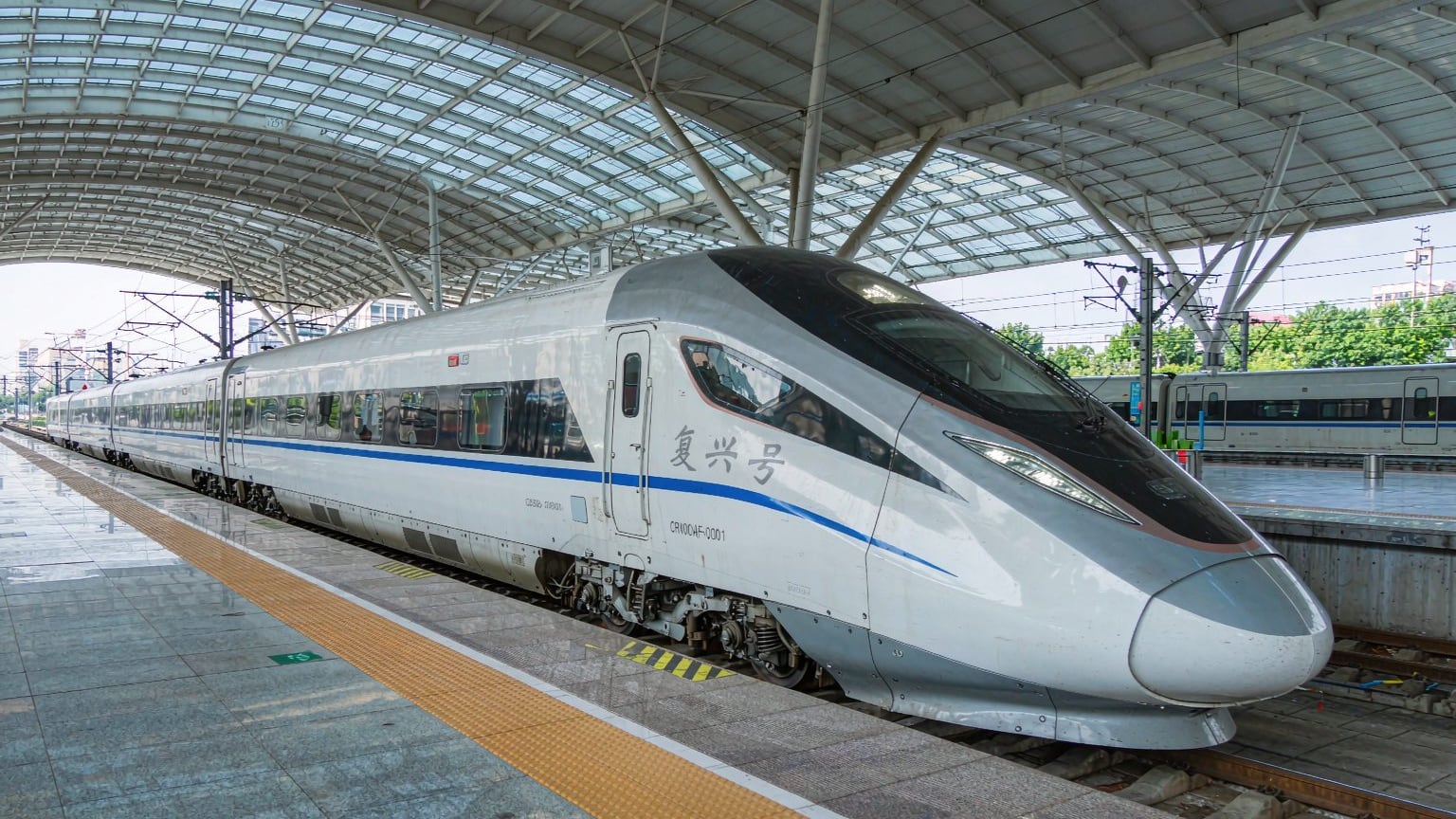
China’s entry rules have transformed since 2023, and 2026 finds the country more open to short-term foreign visitors than at any point in decades. Two schemes matter:
- The 240-hour (10-day) visa-free transit — enter via approved ports, travel within approved provinces, exit to a third destination.
- The unilateral 30-day visa-free entry — for ordinary visits by nationals of a growing list of countries, currently running through December 31, 2026.
Most Western travelers now enter China with no visa at all. Here is how it works.
Scheme 1: 240-hour visa-free transit (LVL — “temporary entry”)
Who qualifies
Passport holders of 57 countries — the list grew again on 20 August 2026, when Kyrgyzstan and Vietnam were added:
- Europe: most EU members (Germany, France, Italy, Spain, Netherlands…), the UK, Ireland, Norway, Switzerland, Ukraine, Russia, Serbia, Albania and others
- Americas: United States, Canada, Brazil, Mexico, Argentina, Chile — note that Canada now also qualifies for 30-day visa-free entry, which is the simpler option (see below)
- Asia-Pacific: Japan, South Korea, Australia, New Zealand, Indonesia, Singapore, Brunei, UAE, Qatar, Vietnam, Kyrgyzstan
Verify your passport against the current list at the National Immigration Administration before you book. China has only ever added countries to this list, never removed one — but the port and area rules below matter just as much.
The core rules
- You must be in transit — arriving from country A, departing to country C (C ≠ A). Hong Kong, Macau and Taiwan count as separate destinations.
- Up to 240 hours (10 days). The clock starts at 00:00 on the day after you arrive, not at the minute you clear immigration — you usually gain a few hours over what people assume.
- Entry and exit via approved ports — currently 65 ports across 24 provinces, including Beijing (PEK/PKX), Shanghai (PVG/SHA), Guangzhou (CAN), Shenzhen, Xi’an, Chengdu, Chongqing, Guilin, Hangzhou, Xiamen, Kunming, Harbin and more. You do not have to exit from the port you entered. Five ports were added in November 2025, including the Hong Kong–Zhuhai–Macao Bridge and the West Kowloon rail terminal.
- You can travel across provinces. This is the part older guides get wrong. The December 2024 reform explicitly permits cross-province travel within the permitted areas of all 24 participating regions on a single transit entry. A Beijing → Xi’an → Shanghai route, exiting from a different port than you entered, is allowed. Around 60% of travellers now do exactly this.
- But not everywhere. Seven provincial-level regions are outside the scheme entirely: Jilin, Inner Mongolia, Gansu, Qinghai, Ningxia, Xinjiang and Tibet. Within the participating regions, most open their whole area, while a few — Shanxi, Heilongjiang, Jiangxi, and parts of Guangxi, Sichuan and Yunnan — restrict you to listed cities. Check the specific rules before routing through those.
- No paid work, no study. Tourism, business meetings, transit and family visits are fine.
- You must register your address. Hotels do it automatically (see the hotel guide); in a private home, register at the local police station within 24 hours.
What to show at immigration
- A passport valid for the trip
- An onward confirmed ticket to a third country/region departing within 240 hours
- (Occasionally) accommodation proof for your stay
Tell the border officer you want the “240-hour visa-free transit” (there are dedicated lanes/counters at major ports). You will fill in an arrival card, and the officer issues a temporary-entry stamp noting your stay permit.
Scheme 2: Unilateral 30-day visa-free entry
Since late 2023 China has incrementally granted ordinary passport holders 30 days of visa-free entry for tourism, business, family visits, exchange and transit — no onward ticket required, no provincial restrictions.
- Currently covers 50 countries — including France, Germany, Italy, Spain, the Netherlands, Switzerland, Sweden, Poland, Australia, New Zealand, South Korea, Japan, Brazil, Argentina, Chile, Peru, Uruguay, the Gulf states, Russia, Canada and the UK. For 48 of them the policy runs until December 31, 2026; Russia’s runs to December 31, 2027; Brunei’s has no end date.
- Malaysia, Thailand, Singapore and a few others get the same 30 days — but through bilateral mutual-exemption agreements, not this unilateral policy. Practically it means the same thing; it matters only because those countries are absent from the official unilateral list.
- Canada was added in 2026. Ordinary Canadian passport holders have been visa-exempt since February 17 2026, for stays of up to 30 days. The exemption is currently scheduled to run until December 31 2026.
- This is the better scheme if you qualify: enter at any port, go anywhere, no onward-ticket gymnastics.
Canada — the details. Per the official notice, ordinary Canadian passport holders can enter China without a visa for business, tourism, family or friends visits, exchange and transit, staying up to 30 days per entry. The exemption applied from February 17 2026 and runs until December 31 2026. Source: Notice on Visa Exemption policy, Chinese Visa Application Service Center. Unlike the transit scheme, there is no onward-ticket requirement and no provincial limit.
Check the current list before you book — it has grown repeatedly and details shift. The National Immigration Administration (nia.gov.cn) and Chinese embassy sites are the authoritative sources.
Which scheme applies to you?
| Your situation | Use |
|---|---|
| Your country is on the 30-day list (incl. Canada) | 30-day visa-free entry — easiest, go anywhere |
| Not on the list, transiting onward to a third country | 240-hour transit — cross-province OK, 65 ports |
| Neither | Apply for an L (tourist) visa at a consulate or visa center |
| Cruise passenger / group tour | Separate group visa-free schemes exist — ask your operator |
Practical tips that save headaches
- Book flights that respect the exit window. Give yourself buffer — a weather delay on day 10 is your problem, not the airline’s.
- Hotels register you automatically. Every legal guest stay generates a temporary residence registration; keep the little registration slip the hotel prints.
- Regional loops that work great on transit: Beijing + Tianjin + Chengde · Shanghai + Suzhou + Hangzhou + Nanjing · Guangzhou + Shenzhen (and on to Hong Kong as your exit).
- High-speed rail and attraction bookings all work passport-first — see the train guide and our first-timer itinerary.
- Overstay = fines up to ¥10,000, detention or deportation. Set a phone alarm for hour 230.
Disclaimer: Entry policies are amended frequently. This guide reflects our understanding as of the date shown. Always confirm with the National Immigration Administration, your airline, or the Chinese embassy in your country before booking.
Frequently asked questions
Do Canadian passport holders need a visa to enter China?
No. Ordinary Canadian passport holders are exempt from a visa for stays of up to 30 days for business, tourism, family visits, exchange and transit. China's visa exemption for Canada has applied since February 17 2026 and is currently scheduled to run until December 31 2026 — so confirm the current status with the National Immigration Administration before booking near that date.
Do I need to print my onward ticket for visa-free transit?
You are not required to print it, but border officers can ask you to show proof of an onward booking to a third country or region. Have the confirmation easily accessible on your phone — and a screenshot in case connectivity fails.
Can I exit to Hong Kong and re-enter mainland China under the transit policy?
Yes. Hong Kong, Macau and Taiwan count as separate destinations for the onward-ticket rule, so Beijing → Hong Kong counts as valid onward travel. But note the clock: each visa-free transit entry starts its own 240-hour window.
What happens if my flight is delayed past the 240 hours?
Do not overstay. Contact the local exit-entry administration (or ask your airline/hotel to help) and apply for a short extension before your authorized stay expires. Overstays, even short ones, can mean fines and future entry bans.
Is the 240-hour policy the same as the 30-day visa-free policy?
No — they are separate schemes. The 240-hour scheme is for international transit: enter and leave through approved ports within 10 days, with a confirmed onward ticket to a third country. Separately, China runs a unilateral 30-day visa-free entry policy for ordinary tourism and business visits covering 50 countries, extended through December 2026 (Russia through 2027, Brunei indefinitely). If your country is on that list, you skip both visas and transit paperwork entirely.